
-

-
-
-
 Regular price $1,325.00Regular priceSale price $1,325.00You Save 0%
-
-
-
 Regular price $2,245.00Regular priceSale price $2,245.00You Save 0%
-
-
 Regular price $1,204.59Regular priceSale price $1,204.59You Save 0%
-
-
-
-

-

-

-

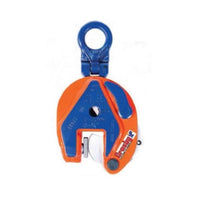

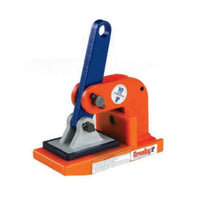
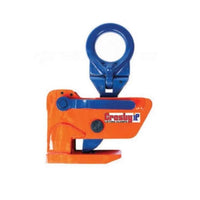
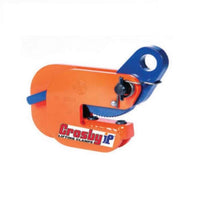


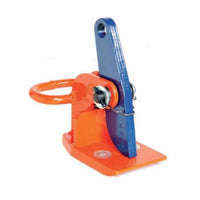


Plate Clamps for Lifting
Plate clamps for lifting are an indispensable tool in a variety of industries, from construction and manufacturing to material handling and warehouse operations. Specifically designed to move sheet metal, steel plates, and other similar materials, they are the perfect solution for transporting cumbersome materials with precision and ease. Also called plate dogs or plate grabs, these lifting plate clamps grip the edge of steel plate and sheet metal so a crane, hoist, or lifting beam can move it without welding lugs or wrapping slings.
Whether you need a steel plate clamp for lifting sheet stock off a pallet or a set of lifting clamps for steel plate on a fab floor, the right choice comes down to load, jaw opening, and material hardness - which we break down below.
We stock plate clamps from Crosby, Terrier, and M&W, with working load limits from 1,000 lbs. up to 60,000 lbs.
Vertical vs Horizontal
There are two primary styles of plate lifting clamps: horizontal and vertical. As their name implies, the primary difference is their lifting orientation.
Vertical Lifting Clamps for Plates
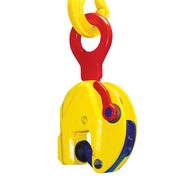
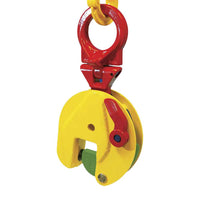
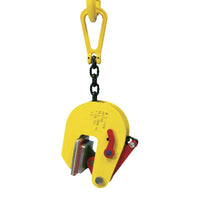
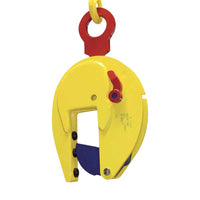
Vertical clamps have jaws that close vertically to create a secure grip on your metal sheets or steel plates.
Most are intended only for vertical orientation lifting, but there is a subset called universal lifting clamps. They are designed to be able to move a sheet horizontally to vertically or vice versa.
Horizontal Steel Plate Lifting Clamps
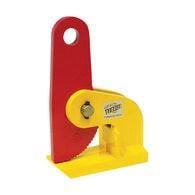
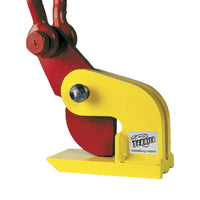
Horizontal plate clamps are used in pairs, one on each side of the sheet. This style is often used for both lifting and unloading material because you can move multiple sheets at the same time.
Universal Lifting Clamps
Universal lifting clamps work in both orientations. One clamp lets you lift a plate flat, turn it, and set it down vertical, or the reverse, without changing your rigging. Shop the Terrier TSU and Crosby IPU10.
Plate Lifting Clamps at a Glance
Choosing a Plate Lifting Clamp
Once you know whether you need a vertical, horizontal, or universal style clamp, choosing the right one for your application depends on your load. You'll need the weight, the hardness, and the thickness. This matters most when you're comparing steel plate lifting clamps built for heavier gauge stock to lighter-duty options made for sheet metal.
Working Load Limit
Choose a plate dog clamp with a working load limit (WLL) at or above the weight of your plate. Check the minimum load too. Many plate clamps need a minimum load (often 10% - 20% of the WLL, but confirm on the spec sheet) for the jaw to grip as designed.
Jaw Opening
The jaw opening is the range of plate thickness a clamp is built to grip. Measure your plate and choose a clamp whose jaw range covers it. We off standard, large, and extra large openings.
Clamp Force
It takes more force to clamp onto a harder surface. Some clamps are built to work with specific levels of material hardness to ensure a more secure grip.
Non-Marring Plate Clamps for Finished Surfaces
Standard serrated jaws can mark polished, painted, or stainless steel plate. If surface finish matters, look at non-marring (also called non-marking) plate clamps, such as the Crosby IPNM10N and Terrier TNMK series, and check the spec sheet for your material.
Frequently Asked Questions
Q: What are lifting clamps for plates used for?
A: Lifting clamps for plates (also called plate clamps) grip and hoist steel plate, sheet metal, and other flat stock without needing welding, drilling, or wrapped slings. They attach directly to a crane hook, hoist, or lifting beam, and the clamp's jaws bite into the material to create a secure hold while it's suspended or moved.
Q: What is a plate clamp for lifting best used for?
A: A plate clamp for lifting is purpose-built for handling flat, rigid material - steel plate, sheet metal, and similar stock - in construction, fabrication, and warehouse settings. Compared to slinging a plate, a clamp gives you a faster, more repeatable connection point for repetitive lifts.
Q: What's a steel plate clamp for lifting best suited for?
A: A steel plate clamp for lifting is built specifically to grip flat steel stock so it can be moved by crane, hoist, or lifting beam without fasteners or slings. Match the clamp's working load limit and jaw opening to your plate's weight and thickness before use.
Q: How are lifting clamps for steel plate different from standard plate clamps?
A: Most plate clamps are already built with steel plate as the primary use case, so the two terms usually describe the same product. The differences that actually matter are orientation (vertical, horizontal, or universal), working load limit, and whether the clamp is rated for your material's hardness.
Q: What load capacity do steel plate lifting clamps offer?
A: Steel plate lifting clamps on this page range from roughly 1,000 lbs. up to 60,000 lbs. working load limit, depending on the model and manufacturer. Use the Working Load Limit filter above to narrow the list to clamps rated for your load.
Q: Can a lifting clamp for steel plate also handle sheet metal?
A: In many cases, yes - but check the clamp's rated capacity and jaw opening against your material's thickness and hardness first. A clamp built for thicker steel plate may not grip thin sheet metal securely, so match the clamp to the material rather than assuming one size fits all.
Q: What's the difference between a sheet metal clamp lifting option and a steel plate clamp?
A: They work on the same clamping principle, but sheet metal clamps are typically sized and tensioned for thinner, lighter-gauge material, while steel plate clamps are built for thicker, heavier stock. Checking jaw opening and WLL against your actual material is more reliable than going by name alone.
Q: Do plate clamps work for both vertical and horizontal lifting?
A: Some do. Standard vertical and horizontal plate clamps are built for one orientation only, but universal lifting clamps are designed to handle both, letting you move a plate from horizontal to vertical (or the reverse) with a single clamp.
Q: What are plate dogs?
A: "Plate dog" is a common shop name for a plate lifting clamp. Plate dogs, plate grabs, and plate clamps all describe a clamp that bites into the edge of steel plate or sheet metal so a crane or hoist can lift it.
Q: What jaw opening do I need for my plate?
A: Jaw opening is the thickness range a clamp can grip. Measure your plate and pick a clamp whose range covers it. Standard, large, and extra large openings are listed on each product page.
Q: Is there a minimum load for plate lifting clamps?
A: Many plate clamps do have one, often 10-20% of the WLL, so the jaw can grip properly. Check the manufacturer's spec sheet for your model.
Q: How many plate clamps do I need for one lift?
A: Horizontal clamps work in pairs. Vertical clamps are typically used one per plate, but long or wide plates may call for multiple clamps and a spreader beam. Have a qualified person plan the lift and follow the manufacturer's instructions.
Questions?
Not sure which plate dog clamp will work best for you? Call to speak to one of our product specialists today - they can answer any questions you may have.
Looking for something other than plate? Browse our beam lifting clamps, pipe lifting clamps, and drum lifting clamps.
US Cargo Control carries a full line of other lifting and rigging products as well, including lifting beams and spreader bars, nylon lifting slings, and outrigger pads.