
Dunnage Bags
Dunnage Air Bag Supplies
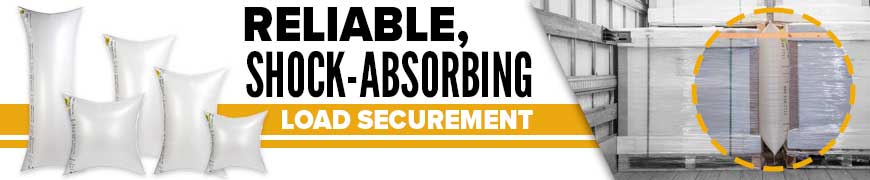
Damaged product can lead to lost revenue, angry customers, a marred reputation, and more. Dunnage bags can help you avoid these outcomes by providing reliable cargo securement and protection.
Used across trucking, rail, and container shipping, these inflatable void fill solutions stabilize cargo by filling empty space and locking loads in place. Whether you’re hauling palletized goods or irregular freight, dunnage air bags provide a fast, efficient way to protect your shipment from movement during transit. These cost-effective products are placed in the gaps between boxes, pallets, etc., then inflated to fill the space. This provides shock / vibration absorption and holds the items in place.
They can be placed both crosswise and lengthwise - since they are made of elastic material, dunnage bags are able to fill many different space sizes with ease. Crosswise placement is ideal for vibration protection, while lengthwise placement is better for impact cushioning.
What are Dunnage Bags?
Dunnage bags, also known as inflatable dunnage bags or dunnage air bags, are air-filled cushions placed between cargo to prevent shifting during transportation. They are inserted into voids between pallets or freight and inflated to create lateral pressure, securing the load against movement caused by braking, acceleration, or vibration.
They are commonly used in over-the-road trucking, intermodal containers, railcar shipping, and warehousing and distribution.
Key Features of Dunnage Air Bags
There are multiple features that make industrial dunnage bags a go-to solution for professionals needing reliable cargo protection:
- Load Stabilization: Fills voids to prevent shifting and product damage.
- High Strength Ratings: Designed to handle varying load weights and pressures.
- Lightweight & Efficient: Easy to transport, position, and inflate.
- Reusable: Reduce long-term costs with durable designs.
- Fast Inflation Systems: Improve loading efficiency and reduce labor time.
Why Choose Dunnage Over Other Forms of Cargo Securement?
Compared to traditional methods, air bags offer clear advantages. They are less expensive than many other products used for the same purpose. They are easy to store and transport, and are incredibly versatile - they can be used with almost any type of cargo, even a bulkhead.
Designed for quick placement, air bags are lightweight and inflate/deflate quickly (the average inflation time on our poly-woven bags is 30 seconds or less!).
Level 1 Inflatable Dunnage Bags
Our poly-woven air bags are made from a combination of polypropylene and polyethylene. Certified by the Association of American Railroads, these Level 1 bags can be used in over the road trucks, overseas containers, and railroad cars (intermodal and boxcar).
The bags are 100% recyclable, and can be reused multiple times in non-railroad applications if handled properly.
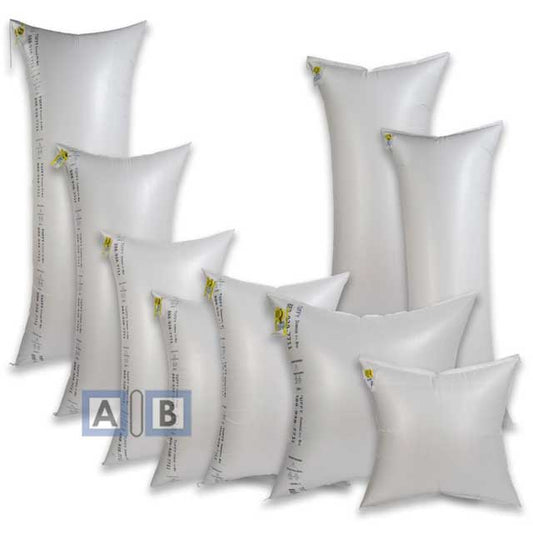
Available in a multiple sizes (from 24" x 36" to 52" x 72"), they come in either a ten-pack or by the pallet, perfect for both large and small operations.
Recommended Bag Width Based on Void Size
When using dunnage bags on a truck, use the chart below to find the recommended bag width based on your void size. Other factors may influence this as well, but these are good basic guidelines.
| Width | Void Size |
| 24" | 0-10" |
| 36" | 0-14" |
| 40" | 0-16" |
| 48" | 0-18" |
| 52" | 0-26" |
If you are using these in an intermodal rail car, the maximum void width is 12", so you can use any bag size over 24".
Air Bag Inflators
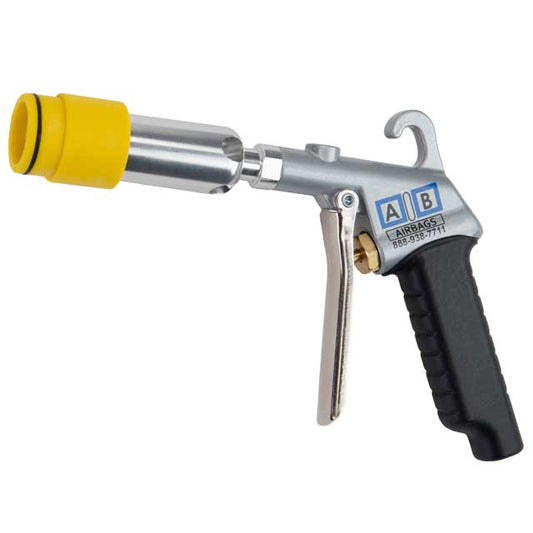
Dunnage bag inflators come in a variety of styles, so it's easy to choose the one that will work best for your application.
Options include a portable design, an extension handle, and a Venturi barrel.
How to Use Dunnage Bags
Using inflatable dunnage bags is straightforward:
- Place the bag in the void between cargo.
- Inflate using a compatible air tool.
- Fill until the bag is firm and secure.
- Confirm the load is stable before transit Proper placement and inflation ensure maximum performance and safety.
Dunnage Bag Safety & Best Practices
A properly used air bag not only protects freight but reduces risk across your operation.
- Do not overinflate beyond recommended pressure.
- Inspect reusable bags for damage before each use.
- Follow industry guidelines for safe cargo securement.
FAQs About Dunnage Bags
Q: What size dunnage bag do I need?
A: It depends on the size of the void between your cargo. Choose a bag that fills the space securely without overinflating.
Q: Are dunnage bags reusable?
A: Poly-woven bags are often reusable if they are handled properly and remain undamaged.
Q: How much pressure should I use?
A: Follow manufacturer guidelines based on bag type and application.
Q: Can dunnage bags be used in rail shipping?
A: Yes, our bags are certified by the Association of American Railroads for use in intermodal and boxcar railroad cars.
Questions?
Find the right dunnage bags for your setup with help from our product experts. They have the knowledge and training to answer your questions and offer you solutions.
Looking for other cargo control solutions? Explore our selection of cargo netting, load bars, E-track straps, and more.