

Working Load Limit, Breaking Strength & Safety Factor: What Do They Mean?
Have you picked up a ratchet strap and saw numbers labeled on the strap, and wonder what they mean? Chances are you're reading the working load limit or break strength. Every piece of load-bearing equipment states these requirements to let you know how much weight that piece of rigging is capable of securing.
When it comes to securing fragile or heavy loads, it is crucial that the product can secure the load without breaking. Although these terms are normally stated, there is confusion about what these terms mean. Read on below to learn the difference between working load limit, break strength, and safety factor.

What Does Working Load Limit Mean?
While they may sound similar, the working load limit should not be confused with breaking strength. Abbreviated as WLL, working load limit is the maximum weight rating that a product, such as a ratchet strap, can handle during safe operation. Before using a piece of load-bearing equipment, always make sure to look at the working load limit before use, as it is the maximum allowable loading force.

What Does Breaking Strength Mean?
The breaking strength is equally as important as the WLL. The break strength also refers to the point at which your load-bearing equipment will fail. It is expressed in pounds and/or kilograms, and will actually fail if you go over the required amount.
When a ratchet strap is made with webbing, end fittings, and a ratchet all with a 10,000-pound breaking strength, then the break strength of the overall product will stay 10,000 pounds. However, if the same strap has a ratchet with an 8,000-pound break strength, then that would reduce the product's strength to 8,000.
Working Load Limit vs. Breaking Strength
Though working load limit and break strength sound similar, they aren't the same in practice. Break strength is always higher, as it is the point at which your equipment will fail. The working load limit will be a fraction of the breaking strength, as it is the maximum weight your equipment can safely sustain during operation.
But, how is the working load limit configured from the breaking strength? This is where the safety factor comes into play.
What is a Safety Factor?
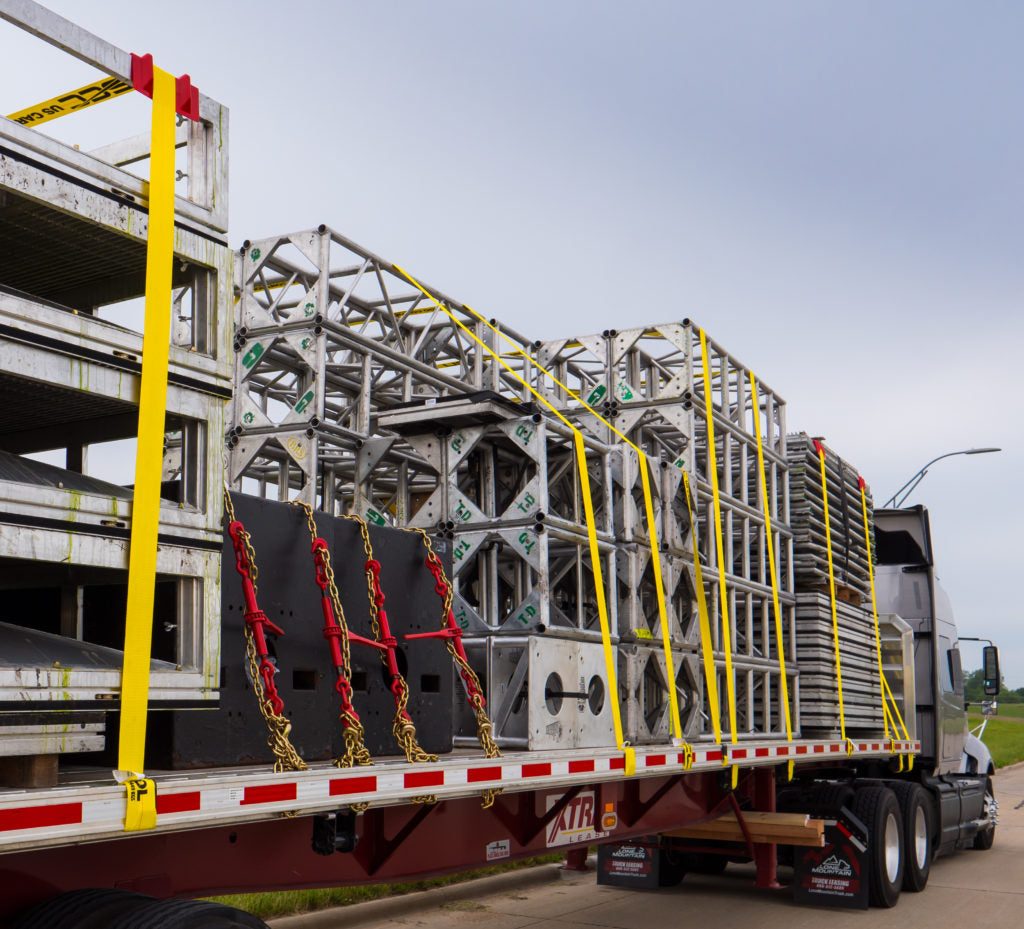
The safety factor, also known as the Design Factor, is the ratio between the working load limit and break strength. Essentially, it is a built-in safety margin that prevents failure in the field. The safety factor will vary from product to product, but generally, it will be 3:1 for tie-down straps or lifting slings. That means the product's break strength is 3X higher than the working load limit.
The working load limit's rating should never exceed when using a sling or tiedown, and this safety factor provides an allowance for shock loading, G force, and other unforeseen factors.
How Do I Know If My Load-Bearing Equipment Is Failing?
To make sure your lifting equipment will perform at its best, perform an inspection prior to use. If you see any damage or wear, dispose of it. To give you an insight into what kind of damage you can potentially see, here are some examples:
- Holes, tears, cuts, snags, or embedded particles
- Broken or worn stitching
- Abrasive wear
- Bending
- Melting, charring, or weld spatter
- Acid or alkali burns
- Any other visible damage that causes doubt about the strength of the equipment
When selecting a ratchet strap, lifting sling, shackle, or any other product, select the product that has suitable characteristics for the type of load, environment, and attachment to the vehicle, as well as a WLL higher than the weight you need to withstand.
Learn more from our comprehensive guide to ratchet straps.


