

The Dos and Don'ts for Load Securement on Trailers
When hauling cargo on your trailer, your load securement methods can make or break it. If you're not aware of how you are strapping down a load, you could create risk or damage to the cargo, others around you, and even yourself. To avoid these consequences, we sat down with Tim Sanders, our Sales Specialist, to learn about the dos and don'ts of load securement on trailers.
1. Have the Appropriate Type and Amount of Securement Equipment

One of the most important considerations when securing cargo is ensuring you have the appropriate type and amount of securement equipment. Whether you own a flatbed trailer or an enclosed trailer, you can haul all kinds of goods. The key is knowing which type of hauling equipment is appropriate for your cargo. To learn more about what hauling equipment you need, read:
3 Types of Accessories Every Enclosed Trailer Hauler Should Have
5 Pieces of Flatbed Trailer Equipment a Truck Driver Should Have.
It's also important to ensure that you have the appropriate number of tiedowns for your task. A general rule is that you use one tie-down if your cargo is shorter than 5 feet and less than 1,000 pounds. If you are hauling more than 1,000 pounds, read how many ratchet straps you need to secure your cargo.
2. Use Tie Downs With The Right Working Load Limit
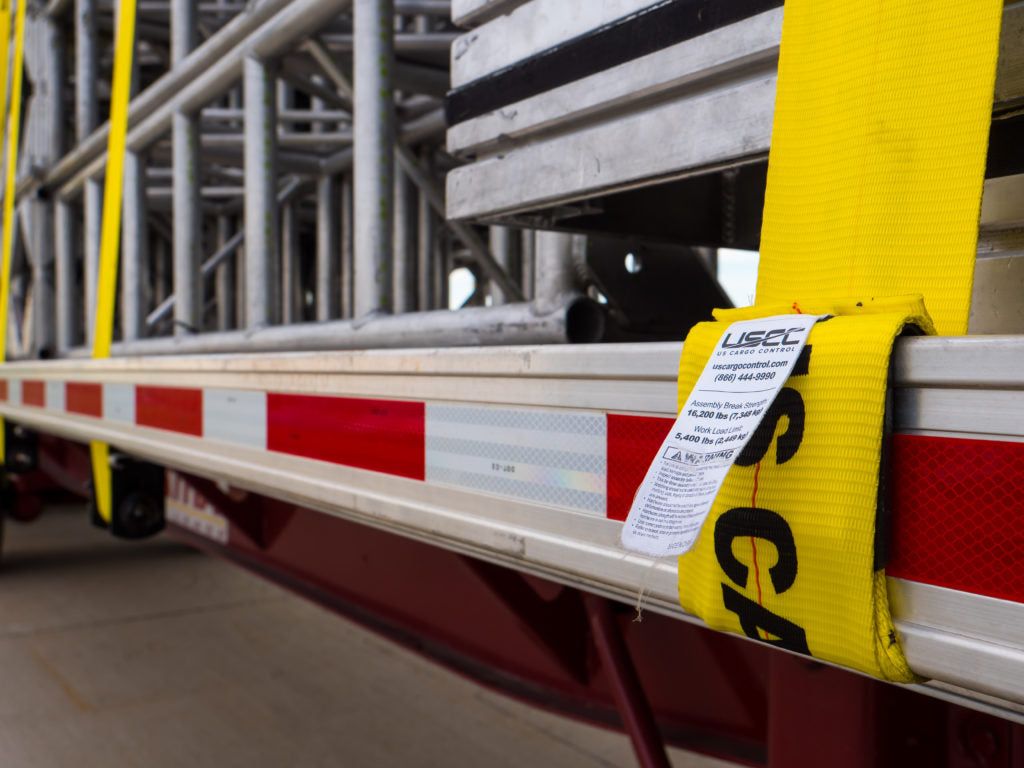
The number of straps, chains, and other equipment in use must have enough aggregate working load limit (WLL) to secure the cargo being hauled. When tightening your straps, be aware of the WLL and breaking strength so you know how much weight that piece of rigging is capable of securing.
Learn more about what working load limit, break strength, and safety factor mean on a piece of rigging equipment.
3. Inspect Tiedowns for Damage and Defects Before Securing Cargo
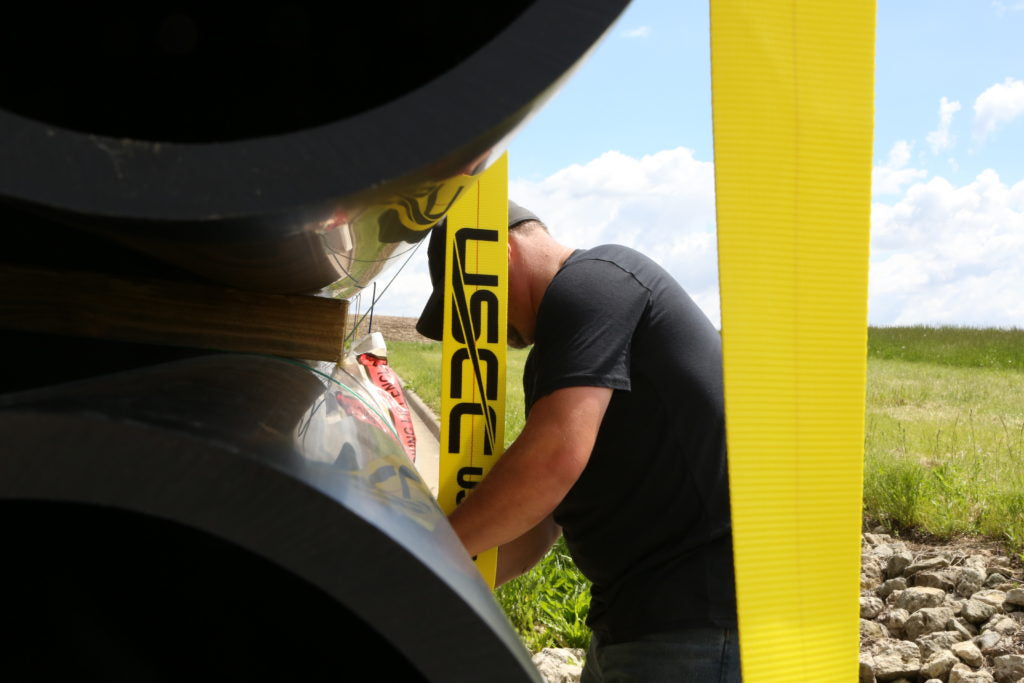
Always inspect your straps for any damage and defects before use. Even if you notice minor damage to the strap, the strap's capability and value will be reduced. If you do see damage or are uncertain that there is damage, you must not use that tiedown. For more information about standards and inspection criteria, go to WSTDA (Web Sling and Tie Down Association) and NACM (National Association of Chain Manufacturers).
To prevent future damage, continuously check your tiedowns when you're on the road. It is common for cargo to shift and the straps to loosen in transit, so it doesn't hurt to see if they are secure (and you will avoid the chance of more damage).
Also, store them in a clean, dry place when you're not using the tiedowns. If they are exposed to sun, rain, road salt, or otherwise, tiedowns can degrade and will lose their effectiveness.
There’s no such thing as overdoing it when it comes to tying everything down. Plan ahead, make sure you have enough equipment to get the job done right, and inspect it frequently. A load that is well secured with good equipment will keep everyone safe and eliminate a lot of headaches during a roadside inspection!
Tim Sanders, Sales Specialist
4. Protect Your Straps with Corner Protectors

There will be sharp edges and rough surfaces when you are securing an item to your trailer. You don't want to add stress to the strap by tightening it on a sharp edge or rough surface because you may cause cutting and abrasion. Consider using corner protectors to protect your straps. They will extend the life of your ratchet straps and also protect your cargo, chains, tarps, and more.


