
Wheel Chocks for Trucks and Trailers
-
starting at$15.99
-
starting at$25.99
-
starting at$29.99
-
starting at$19.99
-
starting at$46.99
-
starting at$16.99
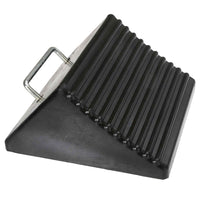
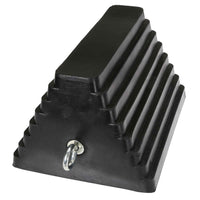
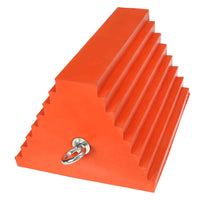
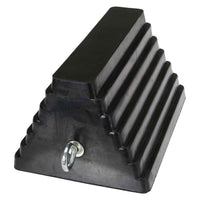
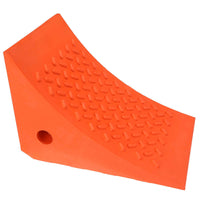
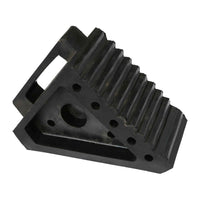
Heavy-Duty Wheel Chocks
Wheel chocks help prevent a parked vehicle or trailer from rolling while it is being loaded, unloaded, serviced, stored, or connected to equipment. Placed firmly against the tire, a wheel chock creates a physical barrier that supplements the vehicle’s parking and braking systems.
US Cargo Control offers heavy-duty rubber and urethane wheel chocks for trucks, trailers, work vehicles, warehouses, loading docks, and other commercial applications. Choose from wedge-style and double-sided pyramid chocks in multiple sizes to match your tires, surface conditions, and operating environment.
For many applications, wheel chocks should be used in pairs. Always follow the vehicle, equipment, and wheel chock manufacturer’s instructions, along with your facility’s established safety procedures.
Shop Wheel Chocks by Material
Material affects the weight, durability, grip, visibility, and environmental resistance of a wheel chock. Our primary options include molded rubber and lightweight urethane.
Rubber Wheel Chocks
Rubber wheel chocks provide dependable grip and impact resistance for trucks, trailers, loading docks, garages, warehouses, and general commercial use. Their weight helps them remain securely positioned against the tire, while molded tread patterns can improve contact with the tire and ground.
Many rubber truck wheel chocks include a molded handle or an eye bolt that can be used as a carrying or tether point. This makes the chocks easier to move, store, and keep together between uses.
Rubber is a strong choice for indoor and outdoor applications, but the exact resistance to weather, chemicals, fuels, and temperature varies by product. Review the individual specifications before choosing a chock for harsh operating conditions.
Urethane Wheel Chocks
Urethane wheel chocks provide a lightweight alternative to traditional rubber. They are easy for drivers and equipment operators to carry and position, especially when several chocks must be moved throughout the day.
Urethane also offers resistance to impact, abrasion, moisture, oils, fuels, and many common industrial conditions. Brightly colored urethane chocks can provide improved visibility around parked equipment, loading areas, and busy job sites.
Our 10-inch urethane double-sided wheel chock provides the same general size and pyramid-style design as the comparable 10-inch rubber wheel chock but is just one third of the weight. This is a significant benefit for drivers moving multiple wheel chocks at once to secure their vehicle.
Wheel Chock Styles
The best chock shape depends on how frequently the chock is moved, the tire profile, the direction of possible vehicle movement, and the available storage space.
Wedge Wheel Chocks
A wedge-style wheel chock has a sloped or curved face that rests against the tire and a flat back that faces away from it. This style provides a broad surface for the tire and is easy to position by hand.
Wedge chocks are a practical choice for commercial trucks, trailers, service vehicles, loading areas, and maintenance facilities. Some models feature a curved face to better follow the shape of the tire, plus molded tread patterns for additional contact.
Double-Sided Pyramid Wheel Chocks
Double-sided pyramid wheel chocks have a tire-contact surface on both sides. This allows the chock to be positioned in either direction without turning it around, making it a versatile choice for drivers and crews that frequently deploy and retrieve chocks.
Several of our trailer wheel chocks include an eye bolt that can be connected to a rope, chain, cable, or other suitable tether for carrying and storage.
Wide Wheel Chocks
Wide wheel chocks provide a larger contact area for broad commercial tires. The additional width can improve stability and make the chock less likely to tip or shift when it is properly placed on a suitable surface.
Compare the chock width with the tire tread width and consult the product specifications before selecting a model.
Truck Wheel Chocks
Truck wheel chocks are used with commercial trucks, work trucks, utility vehicles, delivery vehicles, service equipment, and other heavy vehicles. They can help reduce unintended movement during loading, maintenance, inspection, parking, and equipment operation.
When selecting a truck chock, consider:
- The truck’s gross weight and tire size
- The number of wheels or axles that must be secured
- Whether the vehicle is parked on level ground or a grade
- The condition and material of the parking surface
- Exposure to oil, fuel, moisture, sunlight, or extreme temperatures
- How often the chocks will be carried and repositioned
Large commercial trucks and heavy equipment may require larger or application-specific chocks beyond the products intended for standard truck and trailer tires.
Trailer Wheel Chocks
Trailer wheel chocks help stabilize parked utility, cargo, flatbed, enclosed, commercial, and semi-trailers. They may be used when a trailer is parked, disconnected, loaded, unloaded, or being serviced.
A trailer wheel chock should fit the tire and provide stable contact with the ground. For trailers that can move in either direction, use chocks according to the trailer manufacturer’s instructions and your facility’s established procedures.
Wheel chocks do not replace the parking brake, landing gear, dock restraint, jack, or any other equipment required for the application.
How to Choose the Right Wheel Chock Size
Wheel chock size should be based on more than tire height alone. Vehicle weight, tire diameter, tire width, surface conditions, parking grade, chock material, and manufacturer recommendations can all affect the proper selection.
Before choosing a wheel chock:
- Measure the tire diameter and tread width.
- Check the vehicle or trailer manufacturer’s chocking recommendations.
- Review the wheel chock’s stated tire-size and vehicle-weight guidance.
- Choose a chock wide enough to provide stable contact with the tire.
- Account for the steepest grade where the chock will be used.
- Consider whether the surface is concrete, asphalt, gravel, dirt, wet, icy, or uneven.
- Use purpose-built heavy-equipment chocks for oversized industrial tires.
Do not rely on a universal size formula for every truck, trailer, or piece of equipment. When the correct size is unclear, consult the vehicle and chock manufacturers before use.
How to Use Wheel Chocks
Proper placement is essential. A chock that is undersized, loosely positioned, or placed on an unsuitable surface may not prevent movement.
- Park the truck or trailer in the designated area.
- Set the parking brake and place the transmission in the required position.
- Inspect the ground for loose debris, oil, ice, gravel, or other conditions that could reduce grip.
- Inspect each wheel chock for cracks, deformation, contamination, or excessive wear.
- Place the chock firmly against the tire in the direction the vehicle could move.
- Use chocks on both sides of the tire when movement could occur in either direction.
- Confirm the chocks are fully seated before beginning work.
- Remove and store the chocks before moving the vehicle.
Use the number and placement of chocks required by the vehicle manufacturer, equipment manufacturer, work procedure, and applicable regulations.
Using Wheel Chocks on Level Ground

On level ground, chocks may be placed in front of and behind a tire to help prevent movement in either direction. The exact number and wheel position depend on the vehicle and work being performed.
Using Wheel Chocks on Heavily-Weight Axles

Place four wheel chocks on two axles for extra safety and stability.
Using Wheel Chocks on a Grade

On a grade, position the chocks on the downhill side of the tires so the vehicle would roll into them. Additional chocks may be necessary depending on the vehicle weight, slope, surface, and manufacturer guidance.
Avoid parking on a grade when the work can be completed safely on level ground.
Chocking at a Loading Dock
Loading-dock procedures may require wheel chocks, a mechanical dock restraint, or another approved method to prevent trailer movement and premature departure.
OSHA regulations for powered industrial truck operations state that brakes must be set and wheel chocks placed under the rear wheels of highway trucks while they are boarded with powered industrial trucks. OSHA also recognizes certain mechanical systems that provide equivalent protection in applicable dock operations.
Wheel Chock Safety and Inspection
- Inspect wheel chocks before every use.
- Remove chocks with cracks, splits, severe wear, deformation, or missing components from service.
- Keep tire-contact and ground-contact surfaces free of oil, grease, mud, ice, and debris.
- Never drive over a wheel chock unless the product is specifically designed for that use.
- Do not use lumber, rocks, bricks, or improvised objects as substitutes for properly selected chocks.
- Use carrying handles and tether points only as intended by the manufacturer.
- Store chocks where they are protected from unnecessary damage and are easy for drivers or employees to access.
- Train employees on the correct selection, placement, removal, and storage procedures.
Wheel Chock Regulations
Regulations for trailer and truck wheel chock use vary by government agencies and vehicle type. For information on rules and regulations regarding wheel chocks from the Occupational Safety and Health Administration (OSHA) and the Federal Motor Carrier Safety Administration (FMCSA), see our blog post: Wheel Chock Regulations: What's Required and What's Just Common Sense.
Wheel Chock FAQs
Q: What are wheel chocks used for?
A: Wheel chocks are placed against vehicle or equipment tires to help prevent unintended rolling. They are commonly used during parking, loading, unloading, maintenance, storage, and equipment operation.
Q: How many wheel chocks should I use?
A: The correct number depends on the vehicle, parking surface, slope, direction of possible movement, and work being performed. Chocks are often used in pairs, but some operations require additional chocks. Follow the applicable vehicle, equipment, workplace, and regulatory instructions.
Q: Where should wheel chocks be placed?
A: Place each chock firmly against the tire in the direction of possible movement. On level ground, chocks may be needed in front of and behind a tire. On a grade, place them on the downhill side according to the vehicle manufacturer’s instructions.
Q: What size wheel chock do I need?
A: Choose a size based on the tire dimensions, vehicle weight, parking grade, surface conditions, chock material, and manufacturer recommendations. Do not rely on one universal sizing formula for every vehicle.
Q: Are rubber or urethane wheel chocks better?
A: Rubber chocks provide durable construction, strong surface contact, and useful product weight. Urethane chocks are typically lighter and may provide greater resistance to moisture, oils, fuels, and abrasion. The better option depends on the application and environment.
Q: Can I use trailer chocks for a truck?
A: A trailer chock may also be appropriate for a truck when its size, design, material, and manufacturer guidance match the vehicle and operating conditions. Confirm suitability rather than relying only on the product name.
Q: Do wheel chocks replace the parking brake?
A: No. Wheel chocks supplement the vehicle’s braking and parking systems. Set the parking brake and follow all required vehicle and worksite procedures before placing the chocks.
Q: Do I need wheel chocks at a loading dock?
A: The requirements depend on the vehicle and operation. OSHA’s powered industrial truck rules address securing trucks and trailers during certain loading and unloading activities, and approved mechanical restraints may sometimes provide equivalent protection.
Need Help Choosing Wheel Chocks?
Choosing the right wheel chocks means accounting for the vehicle, tire, grade, surface, environment, and daily use. Contact a US Cargo Control product expert for help comparing rubber and urethane options for your trucks, trailers, fleet, warehouse, or loading dock.
Complete your vehicle safety setup with vehicle safety supplies like reflective tape, lighting and auto-hauling supplies.