
Eye Bolts
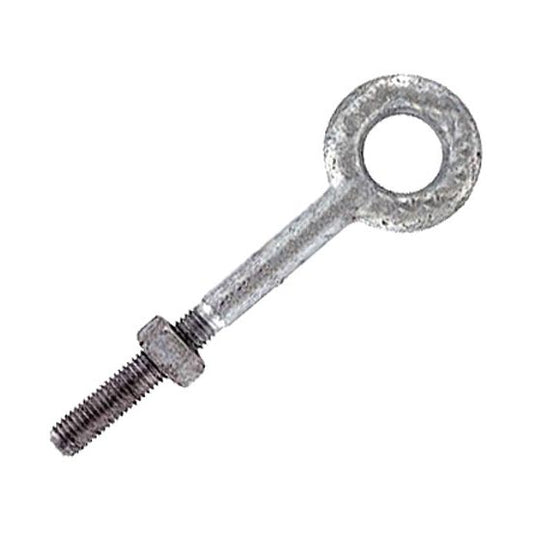
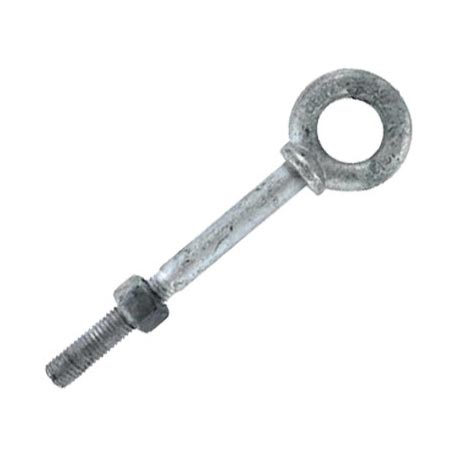
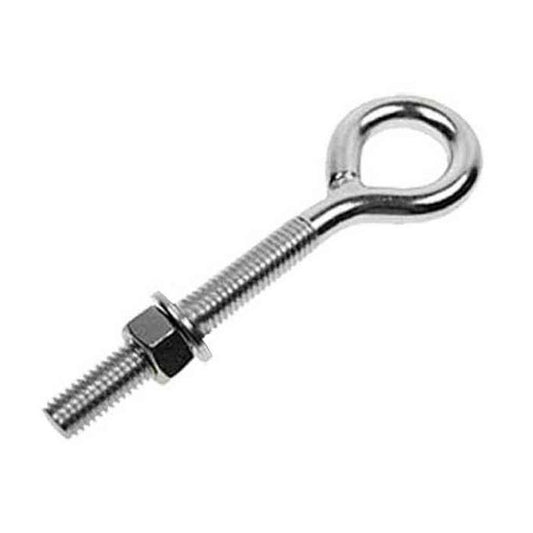
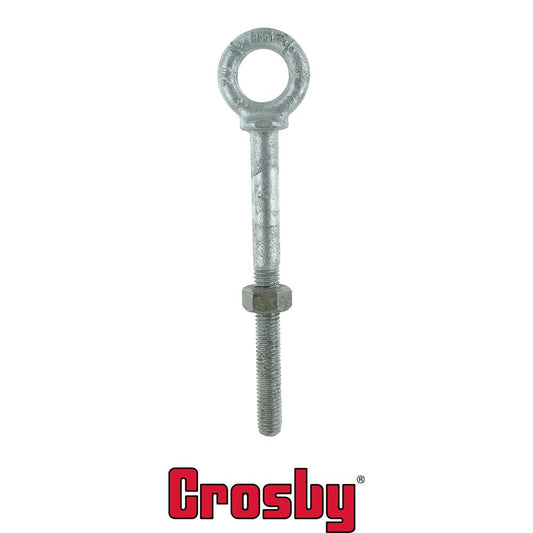

Eye Bolts for Lifting, Rigging, and Anchoring
Eye bolts create a secure attachment point for lifting, rigging, anchoring, and equipment-handling applications. They feature a threaded shank and a looped eye that can connect with compatible hooks, shackles, slings, wire rope, and other rigging hardware.
US Cargo Control offers forged, shoulder, machinery, black oxide, galvanized, and stainless steel options for a wide range of industrial and commercial uses. Whether you need a lifting eye bolt for an approved rigging application or an eye bolt anchor for a general attachment point, start by matching the bolt style, material, thread size, and working load limit to the job.
Not every eye bolt is approved for lifting. Always review the individual product specifications and manufacturer instructions before use.
Shop Eye Bolts by Type
The correct eye bolt depends on the direction of pull, installation method, operating environment, and required capacity. Choosing the proper design is important because standard, shoulder, machinery, welded, and non-welded eye bolts are intended for different uses.
Forged Eye Bolts
Forged eye bolts are formed from steel under pressure to create a strong, durable piece of rigging hardware. They are commonly used in construction, manufacturing, material handling, and other demanding industrial applications.
Our selection includes galvanized forged eye bolts and stainless steel forged eye bolts. Check each product to confirm whether it is rated for lifting and whether it is designed for in-line or angular loading.
Shoulder Eye Bolts
A shoulder eye bolt has a reinforced shoulder between the eye and the threaded shank. When properly seated against the load, this shoulder helps support forces created by an angular pull.
Shoulder-style bolts may be used for certain angular lifting applications when permitted by the manufacturer. Angular loading reduces the available working load limit, sometimes substantially. Never use the in-line capacity for an angled pull, and do not use a standard non-shoulder eye bolt for angular lifting.
Choose from galvanized shoulder eye bolts, black oxide shoulder eye bolts, and stainless steel shoulder eye bolts.
Machinery Eye Bolts
Machinery eye bolts feature a fully threaded shank that installs directly into a tapped hole in machinery, dies, motors, and other equipment. They provide an attachment point for compatible hoists, lifting slings, shackles, and rigging hardware.
The shoulder must seat properly against the receiving surface, and the threads must be fully engaged according to the manufacturer’s instructions. Check the thread size, thread type, shank length, and rated capacity before installation.
Regular Nut Eye Bolts
Regular nut eye bolts, also called non-shoulder eye bolts, are generally intended for in-line pulls along the axis of the bolt. They should not be used for angular lifting because they do not have a shoulder to help resist side-loading forces.
Use these bolts only for applications approved by the manufacturer and make sure the nut has complete thread engagement.
Welded and Non-Welded Eye Bolts
The construction of the eye affects how the bolt can be used:
- Forged eye: Designed for demanding applications and available in rated lifting configurations.
- Welded eye: The eye is closed with a weld, creating a continuous loop. Capacity and approved use depend on the individual product.
- Non-welded or turned eye: The shank is bent to form an open eye. These economical bolts are generally intended for light-duty attachment and should not be assumed suitable for lifting.
Shop welded stainless steel eye bolts and non-welded stainless steel eye bolts.
Lifting Eye Bolts
A lifting eye bolt is specifically manufactured and rated to serve as a lifting or load-handling attachment point. Rated lifting bolts commonly include forged shoulder nut eye bolts and shoulder-type machinery eye bolts.
Before lifting, confirm:
- The product is specifically approved for lifting
- The working load limit is sufficient for the applied load
- The direction and angle of pull are permitted
- The bolt is correctly seated and fully engaged
- The receiving material is strong enough to support the load
- The sling, shackle, hook, and other components are compatible
The entire rigging system is limited by its lowest-rated component. Capacity must be calculated for the actual loading direction rather than the bolt’s in-line rating alone.
Eye Bolt Anchors and Attachment Points
An eye bolt anchor provides a fixed connection point for compatible rope, cable, chain, straps, or rigging hardware. Eye bolts may be installed through a structure with a nut or threaded into a tapped receiving hole, depending on the design.
Some eye bolt anchors are intended for lifting, while others are designed only for tie-down, positioning, utility, or light-duty attachment applications. Do not use a general-purpose anchor bolt for overhead lifting unless it is specifically rated and installed for that purpose.
Galvanized Eye Bolts
Galvanized eye bolts have a protective zinc coating that helps resist rust and corrosion. They are commonly used for construction, industrial, agricultural, and outdoor applications where moisture may be present.
Galvanized steel generally provides a durable and economical option for everyday industrial environments. Inspect the coating and the underlying bolt regularly, especially when the hardware is exposed to weather, chemicals, salt, or abrasion.
Stainless Steel Eye Bolts
stainless steel eye bolts provide strong corrosion resistance for marine, outdoor, food-processing, chemical, and high-moisture environments. Unlike a surface coating, stainless steel’s corrosion resistance comes from the composition of the material itself.
304 stainless steel Eye Bolts
304 stainless steel eye bolts are a versatile option for outdoor, agricultural, automotive, manufacturing, and general-purpose applications. They provide good corrosion resistance in many common environments.
316 stainless steel Eye Bolts
316 stainless steel eye bolts contain molybdenum, which provides increased resistance to chlorides and pitting. This makes 316 stainless steel a strong choice for marine, coastal, chemical, and other highly corrosive environments.
Material alone does not determine whether an eye bolt is suitable for lifting. Confirm the construction, rating, and approved use of the individual product.
Black Oxide Eye Bolts
Eye bolts with a black oxide finish offer increased corrosion-resistance and wear-resistance, and the finish won't chip, peel, or flake.
Crosby® Eye Bolts
Crosby eye bolts are available for professional lifting and rigging applications. Options include G-277 shoulder nut eye bolts, S-279 machinery eye bolts, forged eye nuts, and pad eyes.
Selected Crosby forged eye bolts meet or exceed applicable ASME B30.26 requirements. Refer to the individual product page for working load limits, installation requirements, angular-load reductions, and certifications.
How to Choose the Right Eye Bolt
1. Determine How the Eye Bolt Will Be Used
First identify whether the bolt will be used for overhead lifting, machinery handling, anchoring, tie-down, positioning, or another attachment application. This determines which styles and ratings are appropriate.
2. Identify the Direction of Pull
A straight, in-line pull runs along the axis of the bolt. An angular pull places additional force on the eye and shank. Regular non-shoulder eye bolts should be used only for approved in-line applications. Use a properly seated shoulder eye bolt or another manufacturer-approved lifting point when angular loading is required.
3. Check the Working Load Limit
Select an eye bolt with a rated working load limit that meets the actual applied load. For multi-leg lifts, account for sling angles and the resulting tension on each lifting point.
Do not use breaking strength as the allowable load and never exceed the manufacturer-rated capacity.
4. Match the Thread Size and Installation
Confirm the bolt diameter, thread pitch, shank length, and receiving-hole requirements. The threads must be clean, undamaged, compatible, and engaged to the depth specified by the manufacturer.
5. Choose the Right Material
- Galvanized steel: A durable, economical choice for general industrial and outdoor applications
- 304 stainless steel: Good corrosion resistance for many outdoor and industrial environments
- 316 stainless steel: Increased resistance in marine, coastal, chloride, and chemical environments
6. Match the Eye with Your Rigging Hardware
Make sure the eye is large enough for the intended hook, shackle, lifting sling, or wire rope connection. The connecting component should bear correctly in the eye without binding, point loading, or applying force outside the permitted plane.
Eye Bolt Installation and Safety
- Inspect each eye bolt before use for cracks, corrosion, damaged threads, wear, bending, elongation, or other deformation.
- Remove damaged or questionable hardware from service.
- Clean the bolt threads and receiving threads before installation.
- Seat the shoulder completely and securely against the load when using a shoulder eye bolt.
- Do not force, grind, machine, weld, or otherwise modify an eye bolt.
- Apply the load in the plane of the eye and in the direction permitted by the manufacturer.
- Do not use a regular non-shoulder eye bolt for angular lifting.
- Account for reduced capacity whenever the load is not applied in line with the bolt axis.
- Do not shock-load an eye bolt or exceed its rated working load limit.
- Store rigging hardware in a clean, dry location and protect it from damaging chemicals and environmental exposure.
Manufacturer instructions take precedence over general selection guidance. Refer to the applicable product documentation before installing or loading any lifting eye bolt.
Other Eye Bolt and Anchor Options
In addition to rated rigging eye bolts, US Cargo Control offers attachment hardware for utility, wood, piping, and general anchoring applications.
- stainless steel U-bolts: Used to secure pipe, tubing, cable, and other round materials to a supporting surface.
- Eye bolts with rings: Provide a ring-style attachment point for compatible rope, cable, or hardware. Review the individual rating before use.
- Lag eye screws: Install into wood to create a light-duty attachment or anchor point. Capacity depends heavily on the wood species, condition, installation depth, and loading direction.
- Lag screws with rings: Provide a ring attachment point for compatible utility and anchoring applications in wood.
These general-purpose products should not be used for overhead lifting unless the individual item is specifically rated and approved for that use.
Eye Bolt FAQs
Q: What is an eye bolt?
A: An eye bolt is a threaded fastener with a loop or eye at one end. It creates an attachment point for compatible hooks, shackles, slings, wire rope, cable, rope, or other hardware.
Q: Can every eye bolt be used for lifting?
A: No. Only use an eye bolt for lifting when the product is specifically manufactured and rated for that purpose. Turned, non-welded, lag-style, and general-purpose eye bolts may not have a lifting rating.
Q: What is the difference between a regular and shoulder eye bolt?
A: A regular eye bolt does not have a reinforced shoulder and is generally intended for approved in-line pulls. A shoulder eye bolt has a shoulder designed to seat against the load and may be suitable for certain angular loads when used according to the manufacturer’s instructions.
Q: Can an eye bolt be loaded at an angle?
A: Only certain shoulder or machinery eye bolts may be loaded at an angle. Angular loading reduces capacity, and the permitted angle and adjusted working load limit vary by product. Check the manufacturer’s loading table before use.
Q: What is a machinery eye bolt?
A: A machinery eye bolt has a fully threaded shank that installs into a tapped hole in machinery or equipment. Rated versions may be used as lifting points when properly selected, installed, and loaded.
Q: Should I choose galvanized or stainless steel eye bolts?
A: Galvanized eye bolts are an economical option for general corrosion resistance. stainless steel provides greater corrosion resistance for wet, marine, coastal, and chemical environments. The correct choice depends on the environment and the product’s approved application.
Q: What is an eye bolt anchor used for?
A: An eye bolt anchor creates a fixed connection point for lifting, rigging, tie-down, positioning, or general attachment. The exact use depends on the eye bolt’s design, material, rating, and installation.
Need Help Selecting an Eye Bolt?
Choosing the correct eye bolt requires more than matching the thread size. The lifting method, direction of pull, working load limit, material, and installation all matter.
Contact a US Cargo Control product expert for help selecting eye bolts and compatible rigging hardware, including shackles, turnbuckles, hooks, and lifting slings.