

Using Chain Binders to Safely Tie Down Heavy Cargo
Chain binders are a securement tool for anyone who transports heavy vehicles and machinery, or for those who want a little extra peace of mind when hauling cargo.
Since the number of tie-downs you need to secure cargo is dependent on the cargo length, cargo weight, and cargo type, the value in using chain binders and tie-down chains increases as the weight of your load increases (you need the working load limits of all your tie-downs to add up to at least 50% the weight of your cargo).
Instead of using a large number of nylon tie-down straps, which are more susceptible to cuts and tears when secured to certain machinery (like a Bobcat bucket), use tie-down chains and chain binders for long-lasting securement.
What is a Chain Binder?
Chain binders, also known as load binders, are chain tensioning devices used to anchor down large cargo loads for transport. Made of forged steel and featuring grab hooks or other fittings on each end, chain binders are available in a variety of styles, sizes, and working load limits to fit your needs.

How much does a binder weigh?
A common question we often get about chain binders is, "how heavy are they?". The weight of chain binders varies quite a bit depending on the style and the brand. In general, chain binders can weigh anywhere from 3.5 Lbs. up to 20 Lbs. and beyond. Obviously, using a larger chain size will result in a larger and heavier binder.
Types of chain binders
There are two general types of chain binders to choose from: lever binders and ratchet binders. Each has different advantages and disadvantages to consider, but the main difference lies in how the binder is tightened.
Lever Binder
Lever binders make for easier work, but not necessarily safer. Commonly called a snap binder, lever binders are easier to use and have fewer moving parts (less maintenance) compared to ratchet binders. With a mechanical advantage of 25:1, lever binders use leverage to tighten the chain and lock themselves after the lever rotates 180-degrees around the hinge.
The lever stores energy, so operators need to be careful not to let the handle recoil back at them.

Ratchet Binder
Ratchet binders take some strain off the operator but tightening and untightening generally takes longer. Comprised of a gear, handle, pawl, and end fittings, ratchet binders have a mechanical advantage of 50:1. Compared to lever binders, they have a slower and steadier loading and unloading process, but also cause less strain on the operator.
Since the handle does not store much energy, they are generally considered safer to use compared to lever binders.

Tie Down Chain and Binder Regulations
According to the FMCSA, vehicles with wheels or tracks that weigh 10,000 Lbs. or more are required to be tied down and secured on all 4 corners (at a minimum). The weight of the vehicle also requires a minimum of 4 anchor tie-downs (connections between the load and your trailer) and 4 tightening devices (binders).
Additionally, the length of the load plays a role in determining how many chain binders you will need for a given load. Loads 5' or less require just one tie down; however, if the weight of that object is more than 1,100 Lbs., the load requires two tie-downs. Loads 5' to 10' in length require 2 tie-downs.

Length and weight both play a factor in determining how many tie downs you need.
How To Maintain Transport Chain and Binders
To reduce friction and prolong the life of a lever binder, it's best practice to lubricate its pivot and swivel points routinely. For ratchet binders, you should lubricate both the screw threads and the pawl part.
When storing your load binders, it's best to keep them in a dry location away from the dangers of chemical or environmental damage. Headache racks or similar toolboxes are great for this.
The chain below has been stretched and bent beyond its usable limits.
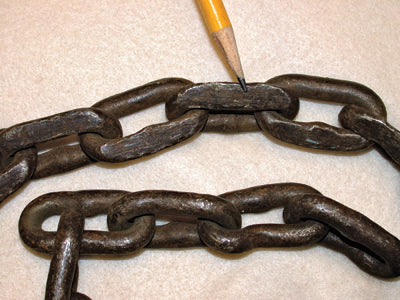
image source
When Should I Replace Transport Chain and Binders?
Be sure to routinely check your binders for any signs of wear, including bending, cracking, nicks, or gouges. If you find evidence of this, it's best to replace your binder. As for your chains, you should be checking the individual links regularly for twisting, bending, stretching, or elongation. Don't forget about checking hooks and other attachments as well.
Heavy-Duty Transport Chain and Binders from US Cargo Control
If chain binders and transport chain sound like the cargo securement solution you need, there's no better place to get them than US Cargo Control. With dozens of different chain binder options to choose from, as well as a variety of chain grades and chain hooks, we have the solution you need to safely and securely transport heavy cargo.
Learn more about transport chain and load binders.
Talk with one of our product experts today for any questions you may have! Call us at (888) 201-9141 or email customerservice@uscargocontrol.com.


