

Outrigger and Crane Pad Safety Tips
Crane and outrigger pads play a crucial role as a safety tool in maintaining stability and preventing accidents during crane operations. They provide support and distribute the load, minimizing the risk of tipping or collapse. Understanding the importance of proper outrigger and crane pad usage is essential for ensuring a safe working environment.
Below are important safety tips for anyone working in the lifting and rigging industry when using outrigger and crane pads.
What are Outrigger Pads?
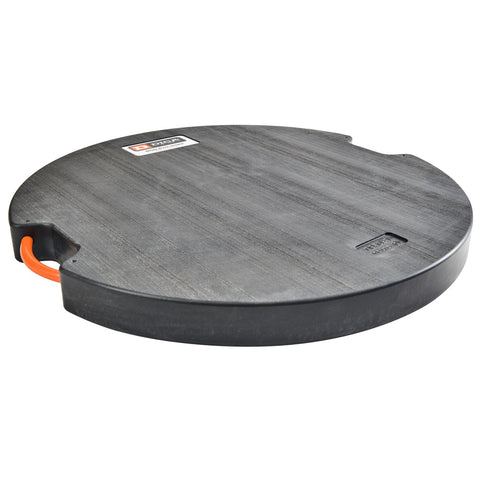
Outrigger pads are essential tools used in any lifting and rigging setup. They are flat objects that come in a variety of different sizes, thicknesses, and materials to accommodate the equipment's weight and points of contact.
Also known as crane pads, these tools sit beneath the outrigger (also called a shoe, foot, arm, or flat) and provide a flat surface that distributes the pressure more evenly across the ground. Because the point of contact between the outrigger and the ground is small, excessive pressure can cause the ground underneath to shift and crumble. These products help alleviate this pressure to keep equipment like cranes stable during lifting jobs.
Outrigger & Crane Pad Safety Tips
Like any lifting and rigging equipment, proper use ensures personnel and equipment stay safe during operations. When using outrigger pads, follow these tips to ensure the job runs safely.

1. Conduct a Site Assessment
Before any crane operations, conduct a thorough site assessment to identify potential hazards. This includes factors like the positioning of your equipment, underground utilities, available space, environmental conditions, and obstructions. Be sure to check for any specific regulations or permits required for crane operations in the area. Always comply with local safety standards and guidelines to avoid any potential legal issues. This includes not only outrigger systems, but also any other equipment involved, like lifting slings, lifting beams, and spreader bars, and any rigging hardware used.
- Browse through our collection of Lifting Slings today!
Part of the site assessment also includes evaluating ground conditions. Ground stability, which involves soil type, compaction, slope, and underground utilities, helps determine the appropriate size and type of outrigger and crane pad needed for the specific conditions. According to OSHA's standards on ground conditions, outrigger pads "must not be assembled or used unless ground conditions are firm, drained, and graded to a sufficient extent..." (1926.1402(b)). Ensure that conditions meet the necessary safety requirements to use cranes and other equipment before taking on the task.
2. Understand Load Capacities
Secondly, be aware of your crane's load capacity and the maximum load it can handle with fully extended outriggers. Exceeding the load capacity or misjudging the load distribution leads to outrigger failure or crane instability. Also, not calculating additional weight components like counterweights used to lessen the pressure on outrigger pads leads to the same problems. Refer to the crane manufacturer's specifications and consult with an engineer if necessary.

3. Proper Setup and Leveling
Selecting the correct outriggers and crane pads is crucial for maintaining stability. Use outriggers specifically designed for the crane model and ensure they are in good working condition. Crane pads should be large enough to distribute the load evenly and prevent too much ground pressure. Use load-bearing calculation tools or consult with experts to determine the appropriate size and type of outriggers and crane pads for your specific application.
Keep these tips in mind when setting up the outrigger system:
- Always keep the outrigger shoe in the center of the pad.
- Make sure that the outrigger pad stays in complete contact with the ground. Never use it to bridge over a hole or other hollow area.
- Clean the area of any loose materials where you plan to sit the outrigger pad on.
- Cribbing blocks can be used to support the outriggers, especially on slopes or uneven ground, further enhancing stability.
4. Regular Inspections and Maintenance
Additionally, make sure to regularly inspect and maintain outriggers and crane pads so that they are in proper working condition. Check for signs of damage, corrosion, or wear, and address any issues quickly. Regular inspections help identify potential problems before they compromise safety. Follow the manufacturer's guidelines for maintenance and conduct load testing when required.
5. Operator Training and Communication
Lastly, ensure that crane operators are adequately trained and experienced in outrigger and crane pad setup. They should have a clear understanding of load capacities, setup procedures, and safety protocols. Establish effective communication channels between the crane operator, signal person, and other personnel involved in the operation to ensure everyone is aware of their roles and responsibilities.
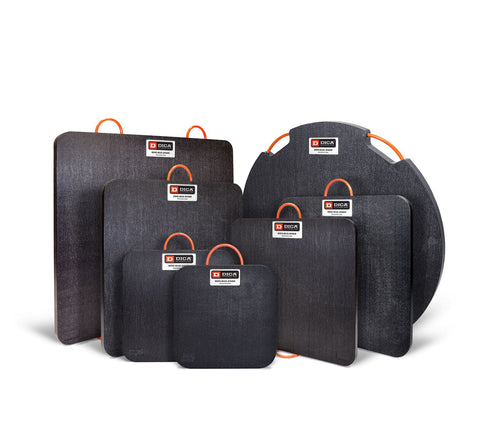
Outrigger and Crane Pads from U.S. Cargo Control
Safety is paramount when working with outriggers and crane pads. That's why US Cargo Control offers high-quality outrigger pads from DICA®. Designed with an engineered thermoplastic material, these products are made to be unbreakable, flexible, and withstand high pressure, temperature, moisture, and other corrosives. DICA® outrigger pads perform well compared to competitors and handle a variety of applications, all while having an ergonomic design for safe and easy usage.
These products come in two different varieties:
-
SafetyTech Pads: These outrigger pads work for a wide variety of equipment, from digging derricks and bucket trucks to mobile cranes and concrete pumpers with higher reactionary forces. SafetyTech pads come in a variety of sizes and thicknesses to accommodate different equipment loads:
- FiberTech Pads: These outrigger pads are made with Fiber-Reinforced Polymers (FRP) for added rigidity and a higher strength-to-weight ratio than SafetyTech pads. With incredible durability and a service life of over 20 years, FiberTech pads are the durable alternative that seriously holds up for any outrigging task.
By following these essential safety tips, you can help ensure stability, prevent accidents, and create a secure work environment. Remember, a well-prepared, knowledgeable team is key to successful and safe crane operations.
More Articles You May Like:
4 Tips on Buying the Right Lifting and Rigging Equipment
How Many Legs Do I Need for My Lifting Sling?
Spreader Bars vs. Lifting Beams: What's the Difference?
What is D/d Ratio, and Why is it Important for Lifting Slings?


