

How to Calculate Minimum Recovery Gear Capacity
When extracting a stuck vehicle, various factors affect the actual pulling force needed, as well as using recovery equipment with high enough load ratings.
During an Iowa Corn Growers Event hosted at US Cargo Control headquarters, Tim Sanders, a Trucking and Transportation expert and USCC business development specialist, gave an informative overview of what goes into effectively extracting a vehicle stuck in the mud, sand, gravel, snow, etc.
When work needs to be done, it seems tempting to grab a strap or chain and pull until something happens. However, if you take a few minutes to do some simple calculations, you'll likely save time in the long run and, more importantly, help ensure the safety of those around the extraction scene.
Step 1: Understanding the Recovery Formula
To find the minimum capacity of your recovery gear, you'll need to know three factors: Total vehicle weight (W), additional rolling resistance (ARR), and additional gradient resistance (AGR). Once you have these calculations, you can quickly determine the recovery equipment strength you will need:
-
What does the stuck vehicle weigh, including all cargo, attachments, trailers, etc.? --> W
- What factors will add to the pulling effort and safe working load limits required to pull the total weight of the vehicle? When we say "additional factors," we're talking about two things: additional rolling resistance (ARR) and additional gradient resistance (AGR)
Minimum Capacity Required = W + ARR + AGR

Step 2: Calculate Additional Rolling Resistance (ARR)
Additional rolling resistance (ARR) is the surface on which the vehicle is stuck or needs to get over to become free. Different surface types have different multipliers that, when multiplied by the total vehicle weight, give you the "ARR."
Keep in mind that these calculations assume the wheels are level with each other.

Additional Rolling Resistance (ARR) = Vehicle Weight (W) x Surface Multiplier
Step 3: Calculate Additional Gradient Resistance (AGR)
Additional gradient resistance (AGR) is the degree of slope on which the extraction will take place. The greater the slope, the higher the multiplier. Again, you will take the total weight of the stuck vehicle and multiply it by the appropriate multiplier.

Additional Gradient Resistance (AGR) = Vehicle Weight (W) x Gradient Multiplier
Example: Stuck Truck Recovery in Snow
Let's say you're recovering a truck with a gross weight of 42,000 lbs. stuck in snow on a 15-degree slope.
Minimum Capacity Required = W + ARR + AGR
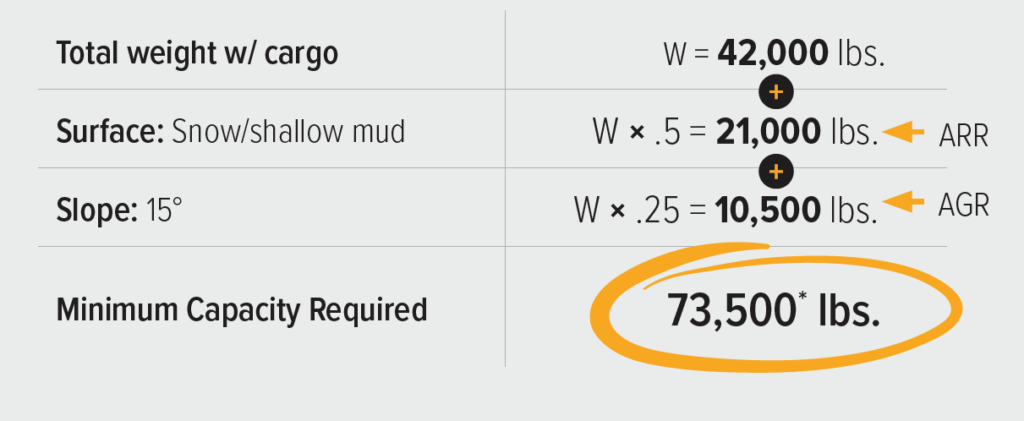
Your recovery strap or chain must exceed this value in working load limit (NOT break strength). That's critical for safe vehicle recovery
Selecting the Right Recovery Straps
When pulling out stuck trucks or vehicles, your recovery gear WLL must exceed the total calculated force and have an extra margin for unpredictable resistance like deep embedding in mud or snow, drag from a seized axle, or damage to the undercarriage that impedes movement.
Popular Heavy-Duty Recovery Options
Look for straps with reinforced eyes and high stretch recovery properties to reduce shock during pulls. Always double-check your gear's WLL before use.
Stay Safe During Vehicle Recovery
Recovery straps, chains, and hooks are powerful tools when used correctly. Always inspect your gear, clear bystanders from the area, and avoid shark jerks that could cause equipment failure.
Unsure what gear you need? Reach out to a vehicle recovery expert at US Cargo Control for guidance. Call us at (866) 444-9990 or email customerservice@USCargoControl.com.
More Vehicle Recovery Resources
How to Choose the Right Recovery Strap
Tow Straps vs. Auto Recovery Straps
How to Pull an Automobile Out of Snow
NOTE: This article contains important safety information about the use of synthetic web slings. However, it does not contain all the information you need to know about handling, lifting, and manipulating materials and loads safely. Sling use is only one part of a lifting system, and it is your responsibility to consider all risk factors prior to using any rigging device or product. Failure to do this may result in severe injury or death due to sling failure and/or loss of load


