

Lifting Beams & Spreader Bars

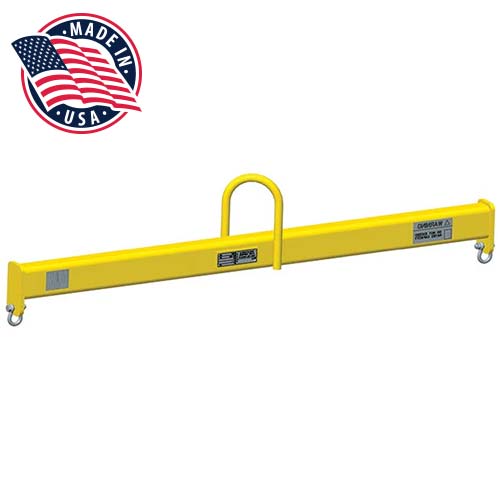
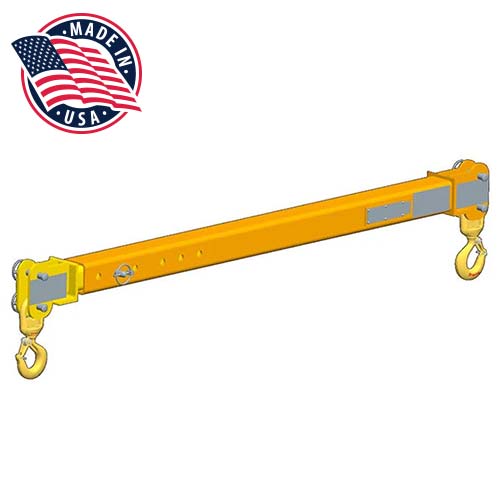
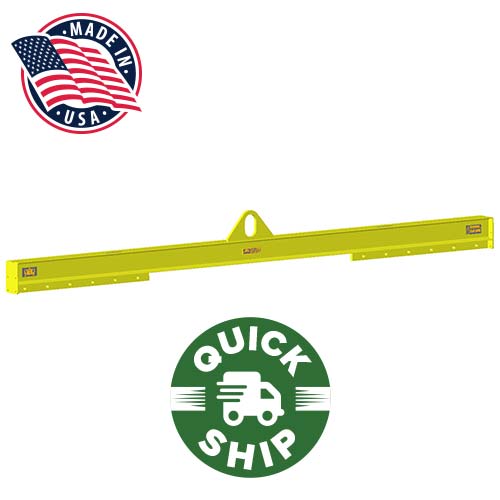
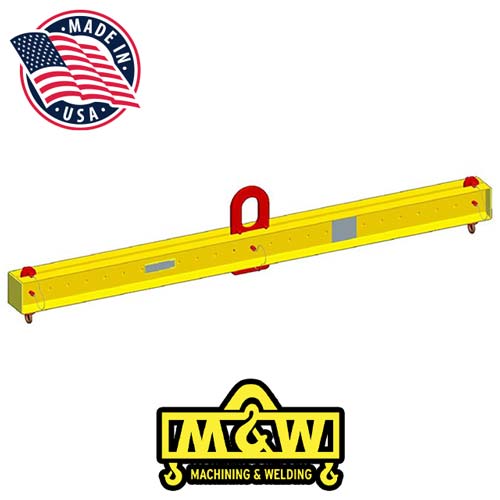
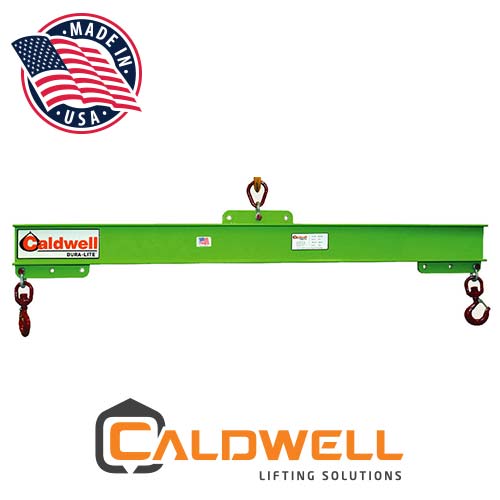

Optimize Your Lifting with a Spreader Beam or Lifting Beam
When lifting heavy or oversized loads, the right equipment makes all the difference. A spreader beam (also called a spreader bar) or a lifting beam are below-the-hook lifting devices designed to improve load stability, reduce stress on lifting slings, and enhance safety during overhead lifts. From construction and manufacturing to shipping or warehouse logistics, hoist beams ensure efficient and secure material handling.
All of our lifting beams and spreader bars are made in the USA and manufactured to meet or exceed all ASME B30.20 regulations. They are proof loaded and shipped with certification paperwork, making jobsite safety compliance simple.
What is a Spreader Beam?
A spreader beam, also called a spreader bar, is a below-the-hook lifting device that holds slings apart and carries the load in compression. It keeps the sling legs from squeezing the load, so you can lift wide, long, or delicate items with a crane or hoist.
Many people use the term "spreader beam" interchangeably for all of the items in this category - spreader bars and lifting beams. However, when it comes to choosing the right hoisting beam for your application, knowing the differences between each type is essential.
Key Differences
- Load Distribution – A lifting beam supports a load with a central lifting point, while a spreader bar distributes weight evenly across multiple points.
- Headroom Considerations – Lifting beams require less vertical clearance than rigging spreader beams / bars.
- Structural Integrity – A spreader beam / bar uses compressive forces, whereas a lifting beam relies on bending forces.
The primary difference is the way they distribute the weight of the load during the lift. A lifting beam is under pressure at the single lifting point and therefore subject to shear and bending, while a spreader bar is designed to work under compression and spreads the load out evenly over a longer area.

Additionally, because there is just one lift point on a lifting beam and bending will occur during lifts, they are required to be larger and heavier than a rigging spreader bar. However, the one point connection design means it works better in low headroom applications.
A lifting spreader beam is suspended from two lifting points, making them particularly useful for handling wide, delicate, or heavy loads. They are also well-suited for situations where the lift points are far apart.
Learn more by checking out our blog Spreader Bars vs. Lifting Beams: What's the Difference?
Types of Hoisting Beams
- Fixed Lifting Beams - Designed for consistent lifting applications with a single load configuration.
- Adjustable Lifting Beams - Feature multiple lifting points for handling different load sizes.
- Specialty Lifting Beams - Created for use in more specialized tasks, such as four point container lifting beams or plate lifting.
- Fixed Spreader Beams - Rigid and pre-set for specific lifting tasks.
- Adjustable Spreader Beams - Allow length adjustments to accommodate different load sizes.
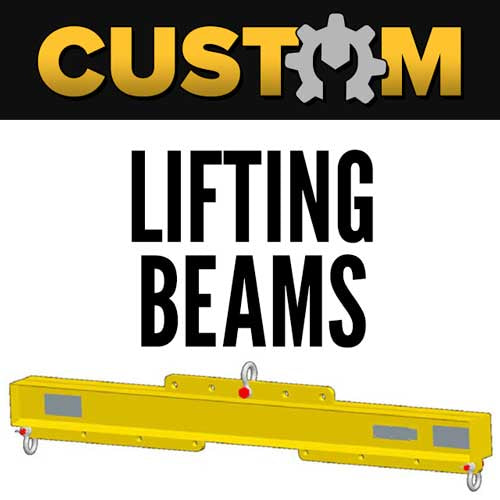
Custom Spreader Beams and Lifting Beams
If you don't see the right configuration for your application, get in touch with our team of product experts by calling or filling out our simple custom lifting beam online request form.
You'll sign off a schematic drawing from an engineer before production starts to ensure it's exactly what you need, and you'll receive proof testing certificates with the final hoisting beam.
Common Applications for Lifting Beams & Spreader Bars
Spreader beams and lifting beams for cranes are used in a wide variety of industries, including construction, manufacturing and warehousing, shipping and logistics, and rigging and cranes. They have many common uses:
- Hoisting shipping containers, steel beams, and precast concrete
- Installing HVAC units, tanks, and machinery
- Lifting modular buildings or awkward structural components
- Operations where multiple lift points are required to prevent load distortion
- Lifting long or wide loads with overhead, mobile, and gantry cranes
How to Choose the Right Spreader Beam
Selecting the right hoisting beam for your job depends on several variables:
-
Rated Capacity and Hardware - Pick a beam rated above your load weight, with a length that matches your lift-point spacing. Make sure your slings, shackles, and hooks are rated to match.
- Available Headroom - A lifting beam is better suited for low headroom applications, as it can connect directly to your crane hook.
-
Load Variability - Are you planning on lifting the same type of load over and over again or will your load change throughout the job? If you are going to be lifting different types of loads, consider an adjustable spreader beam.
- Center of Gravity - Rigging spreader bars have a lower center of gravity than lifting beams.
-
Lifting Point Configuration - Lifting beams offer multiple lifting points to handle unbalanced loads.
Spreader Beam & Lifting Beam FAQs
Q: What's the difference between a spreader beam, spreader bar, and a lifting beam?
A: Spreader beams and spreader bars are the same thing, while a lifting beam works slightly differently. A spreader beam spreads the load across two or more points with angled slings, while a lifting beam supports the load from a single upper pick point and often features multiple lower attachment points.
Q: Can spreader bars be used with all types of cranes?
A: Yes. Spreader bars for cranes are designed for use with overhead cranes, mobile cranes, and gantry cranes—depending on the bar’s rated capacity and configuration.
Q: Can lifting beams and spreader bars be customized?
A: Yes! If you need a hoist beam designed to meet specific lifting requirements, fill out our online form to get started. We will get back to you within one business day, and will work with an engineer to make sure the final product is perfect for your job.
Q: What are the safety requirements for using lifting beams?
A: Hoisting beams have two requirements to meet - ASME B30.20 and OSHA proof testing. All of our beams - both from M&W and Caldwell - exceed ASME B30.20 regulations and are shipped with proof testing certification.
Q: How often should hoisting beams be inspected?
A: An inspection should be performed before every lift, with a more detailed inspection scheduled monthly, weekly, or daily, depending on how heavily the device is used. Look for cracks, bending, or structural damage, and inspect the rigging hardware and attachment points for signs of wear or damage.
Q: What is a spreader bar used for?
A: In rigging, a spreader bar is a below-the-hook device that holds slings apart so they pull straight up instead of squeezing the load. Crews use them to lift wide, long, or fragile items like steel beams, tanks, HVAC units, and precast concrete.
Q: How do I pick the right size spreader beam?
A: Start with three numbers: your load weight, the distance between your lift points, and the headroom under your hook. Choose a beam rated above the load weight with a length that fits your lift-point spacing, then check that your slings, shackles, and hooks are rated to match. Not sure? Call our product specialists.
Q: Should I buy a fixed or adjustable spreader beam?
A: A fixed spreader beam is set to one length, which suits repeat lifts of the same load. An adjustable spreader beam covers a range of lift-point spacing, so it makes sense when your loads change from job to job.
Q: Do you have spreader beams that ship fast?
A: Start with our Quick Ship Hoisting Beams if you're on a deadline. Check each listing for current lead time, or call us and we'll help.
Q: Can you match a Caldwell or Peerless lifting beam?
A: Call us with the model or specs you're replacing. We carry Caldwell Dura-Lite and M&W beams and can point you to a comparable one, or build a custom lifting beam if nothing off the shelf fits.
Q: Can I use a spreader beam with chain or wire rope slings?
A: Yes, as long as the slings, hardware, and beam are all rated for the load and the lift angle. Follow the manufacturer's instructions and have a qualified rigger plan the lift. See our lifting slings to complete the setup.
Q: What is a four point lifting beam, and what is it used for?
A: A four point lifting beam picks a load from four lift points at once. Our container four point lifting beams use an H-shape with built-in lugs that hold webbing or fabric lifting loops (up to 3 inches wide) in place. That keeps soft-sided containers level during the lift.
Lifting Slings and Rigging Supplies
We offer a full line of lifting slings, as well as rigging supplies and hardware to complete your lifting spreader beam setup. Be sure to check our How to Choose a Lifting Sling page for more information on the different types of lifting slings.
Questions?
Not sure what hoist beam you need for your job? Wondering which product is comparable to a specific Caldwell, Peerless, or other lifting beam? Give our product specialists a call. They'll be happy to go over our spreader beams and help determine which would work best for your application.